
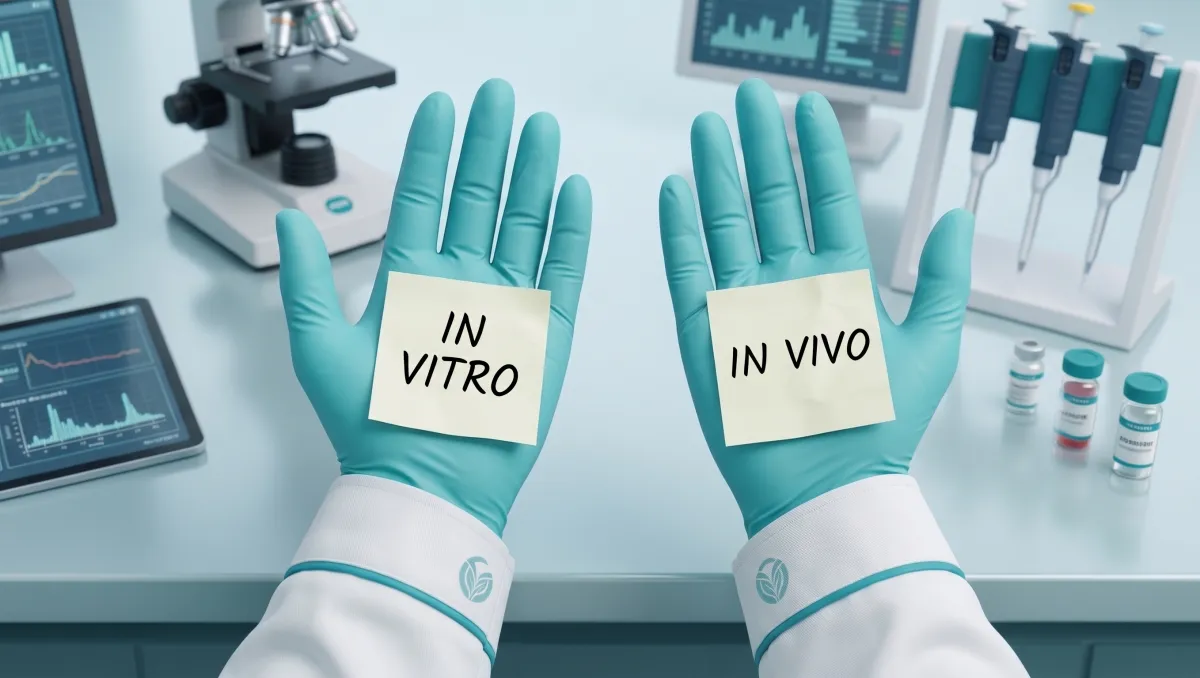
In Vitro and In Vivo
Two Pillars of Scientific Study
In peptide and biomedical research, experiments are often described as either in vitro or in vivo. These terms define where and how studies are conducted. In vitro refers to experiments performed outside a living organism, typically in test tubes, petri dishes, or controlled lab environments. In vivo, by contrast, refers to studies carried out within living organisms, where biological complexity and systemic interactions can be observed. At HELIX Source, understanding this distinction is essential for interpreting research findings with accuracy and transparency.
In Vitro Research
In vitro studies allow scientists to isolate specific variables and observe molecular interactions under controlled conditions. For peptides, this might involve testing stability, receptor binding, or enzymatic activity in cell cultures. The advantage lies in precision and reproducibility, but the limitation is that results may not fully reflect how peptides behave in complex biological systems.
In Vivo Research
In vivo studies take place within living organisms, providing insight into how peptides interact with tissues, organs, and entire biological systems. These experiments reveal pharmacokinetics, immune responses, and systemic effects that cannot be captured in vitro. While more complex and resource‑intensive, in vivo research is critical for understanding real‑world biological outcomes.
Why the Distinction Matters
Both approaches are complementary. In vitro studies provide clarity and control, while in vivo studies offer context and complexity. Together, they create a fuller picture of peptide science. At HELIX Source, we emphasize transparent reporting of whether findings are in vitro or in vivo, ensuring researchers interpret data correctly and apply it responsibly.
Looking Ahead
Advances in technology are blurring the lines between these approaches. Organ‑on‑chip systems, 3D bioprinting, and advanced computational models are bridging the gap, offering controlled environments that mimic living systems. HELIX Source continues to monitor these innovations, ensuring our research content reflects the evolving landscape of peptide science.
References
Hartung, T. (2009). Toxicology for the twenty‑first century. Nature.
Van der Worp, H.B., et al. (2010). Translational research: the importance of in vitro and in vivo models. PLoS Medicine.
Pampaloni, F., et al. (2007). The third dimension bridges the gap between cell culture and live tissue. Nature Reviews Molecular Cell Biology.
For Research Use Only – Not for Human or Animal Use. The contents of this article is for educational and informational purposes only.

