
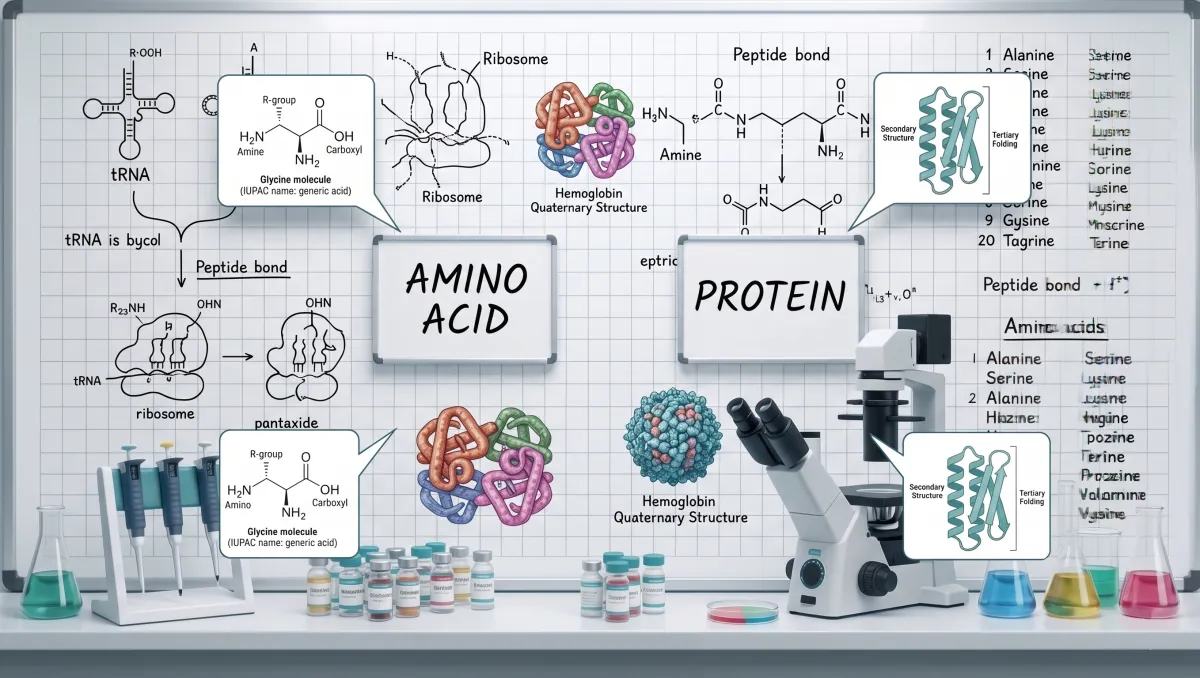
Molecular Building Blocks: How Amino Acids Form Peptides and Proteins
The Foundation of Biochemistry
Every biological process begins with molecules that build life’s architecture. Amino acids, peptides, and proteins are three interconnected forms of these structures — each representing a different level of complexity. At HELIX Source, understanding their distinctions is essential for designing and studying peptides with precision and scientific credibility.
Amino Acids: The Starting Point
Amino acids are the simplest units — small organic molecules containing an amino group, a carboxyl group, and a unique side chain. They serve as the raw materials for peptide synthesis. In research, amino acids are studied for their roles in metabolism, signaling, and structural formation. There are twenty standard amino acids, each contributing distinct chemical properties that determine how peptides fold and function.
Peptides: Chains of Precision
When amino acids link together through peptide bonds, they form peptides — short chains that act as messengers, regulators, and catalysts in biological systems. Peptides can range from just two amino acids to several dozen, and their structure determines their biological activity. In laboratory synthesis, peptides are engineered for targeted research applications, from receptor binding studies to regenerative science.
Proteins: Complex Biological Machines
Proteins are long, folded chains of peptides that perform nearly every function in living organisms — from catalyzing reactions to transporting molecules and maintaining cellular structure. Their complexity arises from the way peptide chains fold into secondary, tertiary, and quaternary structures. Understanding this hierarchy helps researchers predict how peptides behave and interact within larger biological systems.
Why It Matters
Recognizing the relationship between amino acids, peptides, and proteins allows scientists to design molecules with specific functions. At HELIX Source, this knowledge drives the development of research‑grade peptides that meet rigorous standards for purity, reproducibility, and compliance.
Looking Ahead
Advances in peptide synthesis and protein modeling continue to refine how researchers study molecular interactions. HELIX Source remains committed to integrating these discoveries into our workflows, ensuring every peptide we produce reflects the latest scientific understanding.
References
Berg, J.M., et al. (2019). Biochemistry. W.H. Freeman and Company.
Lodish, H., et al. (2021). Molecular Cell Biology. W.H. Freeman.
Alberts, B., et al. (2015). Molecular Biology of the Cell. Garland Science.
For Research Use Only – Not for Human or Animal Use. The contents of this article is for educational and informational purposes only.

