
Melanocortin Agonists: Breakthroughs in Mechanisms and Research Findings
Exploring Receptor Pathways
Melanocortin agonists are compounds that activate melanocortin receptors (MC1R–MC5R), influencing pigmentation, appetite regulation, immune responses, and adrenal function. At HELIX Source, we highlight these peptides as key tools for understanding receptor signaling and systemic regulation.
How They Work
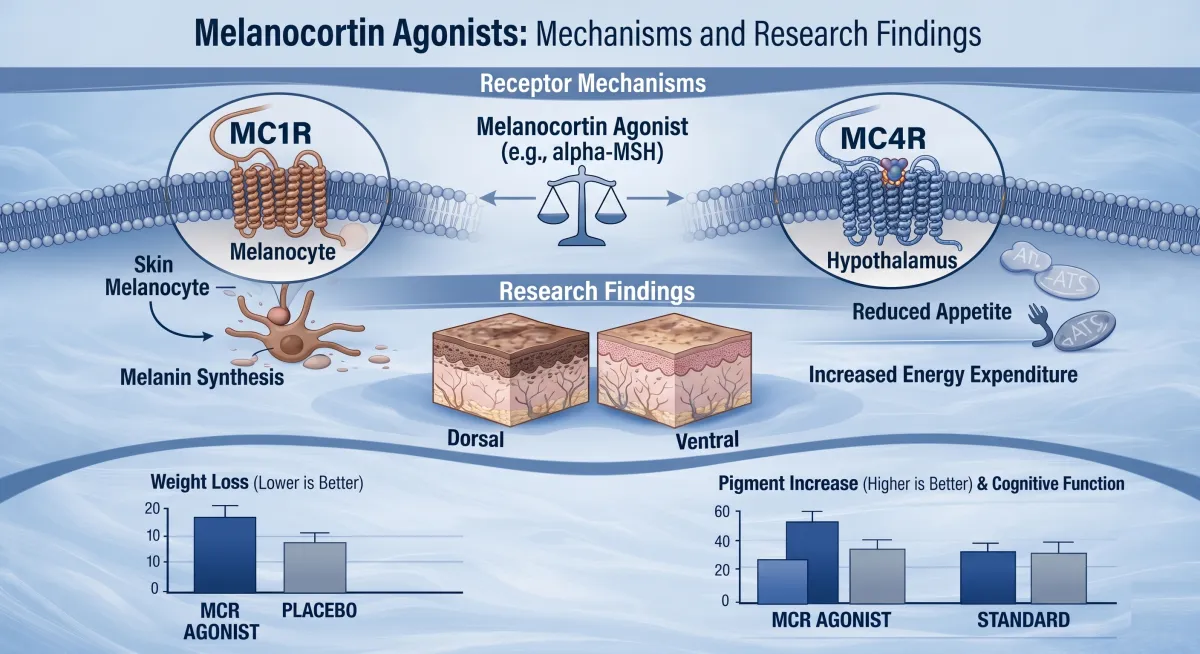
Each receptor plays a distinct role. MC1R is central to melanin production and skin pigmentation. MC2R responds to ACTH, controlling cortisol release from the adrenal glands. MC3R and MC4R are tied to appetite and energy balance, while MC5R has been linked to glandular activity such as sebaceous secretions. Together, they form a network that connects endocrine, metabolic, and immune pathways.
Research Findings
Recent studies show that synthetic melanocortin agonists can increase melanin production in cultured cells, offering insights into pigmentation disorders. MC4R agonists have been studied in rodent models for their effects on appetite suppression and metabolic regulation. Other findings suggest anti‑inflammatory potential, with receptor activation reducing inflammatory signaling in both in vitro and in vivo experiments. ACTH analogs, meanwhile, continue to be used to study adrenal steroid production, reinforcing the importance of MC2R in endocrine research.
Why It Matters
The melanocortin system is a gateway into understanding diverse physiological processes. From pigmentation to metabolism and immune modulation, these receptors provide a window into how peptides can regulate complex biological functions. For HELIX Source, the focus remains on research‑grade peptides, ensuring compliance, reproducibility, and transparency in every study.
Looking Ahead
As research expands, melanocortin agonists are expected to reveal even more about their roles in physiology and disease models. HELIX Source remains committed to monitoring these developments, ensuring our content reflects the latest science and supports researchers with credible insights.
References
Cone, R.D. (2006). Studies on the melanocortin system. Endocrine Reviews.
Getting, S.J. (2006). Melanocortin peptides and their receptors in inflammation. Peptides.
Mountjoy, K.G. (2010). Functions for melanocortin receptors in regulation of physiology and behavior. Annals of the NY Academy of Sciences.
Catania, A., et al. (2004). The melanocortin system in inflammation and autoimmunity. Trends in Pharmacological Sciences.
For Research Use Only – Not for Human or Animal Use. The contents of this article is for educational and informational purposes only.

