








FREE SHIPPING on orders over $100

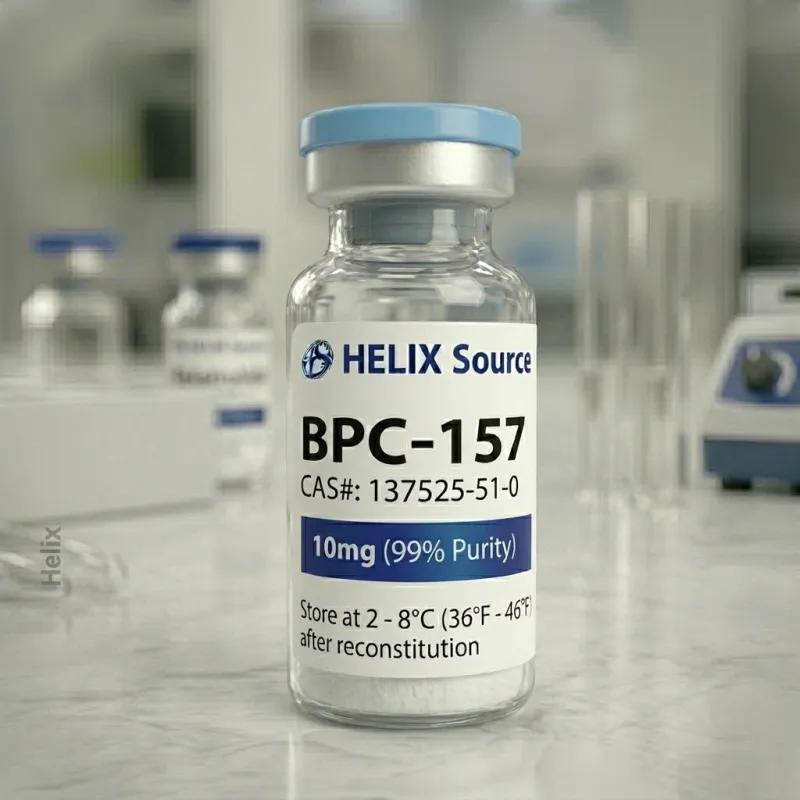
BPC‑157
$75.00
Quantity
You may also like
Customer Reviews

Write a review
Be the first one to review this product
certificate of analysis
Frequently Asked Questions
What is BPC‑157?
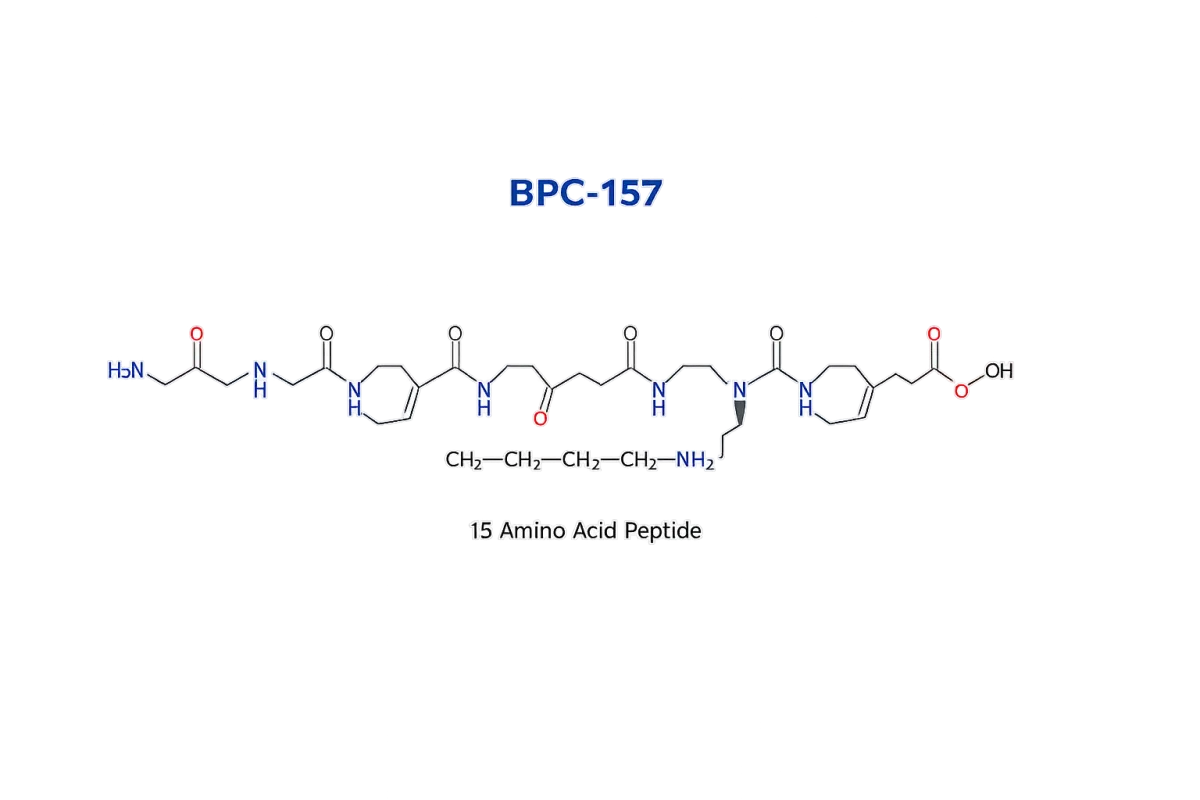
A synthetic pentadecapeptide derived from gastric proteins, used for structural and regenerative research.
How should BPC‑157 be stored?
Lyophilized powder at −20 °C; reconstituted solutions at 2–8 °C for short‑term use.
What is the half‑life of BPC‑157?
Like most small peptides, BPC‑157 has a short plasma half‑life (minutes to hours) depending on administration route. However, its biological effects persist longer in preclinical models due to downstream signaling activity.
What are the main research applications?
Preclinical studies focus on tendon and ligament repair, angiogenesis, gastrointestinal protection, and wound healing.
Is purity verified?
Yes — each batch is third‑party tested for ≥99% purity and endotoxin levels.
Does BPC‑157 affect angiogenesis?
Yes, it has shown pro‑angiogenic activity, enhancing capillary growth and modulating nitric oxide pathways.
Overview
BPC‑157 (Body Protection Compound‑157) is a synthetic fragment of a gastric cytoprotective protein. It has been widely investigated for its ability to support collagen organization, angiogenesis, and cellular migration in preclinical models.
Structural focus: Collagen synthesis and extracellular matrix remodeling
Vascular focus: Angiogenic signaling and nitric oxide modulation
Epithelial focus: Migration and wound‑closure dynamics
Systemic focus: Molecular integrity and pathway resilience
These properties make BPC‑157 a cornerstone molecule for regenerative and structural peptide research.
History
Discovery: Early 1990s, derived from a protective protein in gastric juice.
Development: Synthesized to study cytoprotective and regenerative mechanisms.
Research Expansion: From gastric models to tendon, ligament, and epithelial systems.
Current Use: Investigational peptide for structural and angiogenic research.
Research Findings
Tendon & Ligament Repair: Preclinical studies show accelerated healing of tendon and ligament injuries, with improved collagen alignment and tensile strength.
Angiogenesis & Vascular Effects: Demonstrated pro‑angiogenic activity, enhancing capillary growth and modulating nitric oxide pathways.
Gastrointestinal Protection: Originally identified for gastric mucosa protection; supports epithelial integrity and ulcer healing in animal models.
Neurological Studies: Evidence of neuroprotective effects in models of traumatic brain injury and peripheral nerve damage.
Systemic Regeneration: Broad activity across musculoskeletal, vascular, and epithelial systems, making it a versatile peptide for regenerative research.
Molecular Structure

References
Sikiric P. et al. (1993). A new gastric juice peptide, including BPC‑157, characterized and synthesized. PubMed 8298609.
Pavlovic I. et al. (2003). Promoting effect of BPC‑157 on tendon healing. PubMed 14554208.
Staresinic M. et al. (2003). Effects on ligament and tendon repair. ScienceDirect.
Hsieh M.J. et al. (2015). Pro‑angiogenic potential in wound healing and burn models. PubMed 25995620.
Seiwerth S. et al. (2018). Mechanisms of angiogenic activity and NO‑system modulation. PMC 7096228.
Consistent quality. Trusted supply.

Have a question? Contact Us
SMS: (407) 564-3010
100 E PINE ST SUITE 110, ORLANDO FL 32801
Verified compounds
Connect with Us

All products offered by Helix Source are intended strictly for laboratory, analytical, and research purposes. They are not for human consumption or clinical use of any kind. Statements on this site have not been evaluated by the U.S. Food and Drug Administration and are not intended to diagnose, treat, cure, or prevent any disease.
Helix Source is a chemical supplier, not a compounding pharmacy or outsourcing facility under Sections 503A or 503B of the Federal Food, Drug, and Cosmetic Act.
For inquiries, contact us at (407) 564-3010 or [email protected].
Copyright© 2026 Helix Source - All Rights Reserved.